Online Lending Apps and Sites in the Philippines with Unfair Debt Collection Practices
Introduction
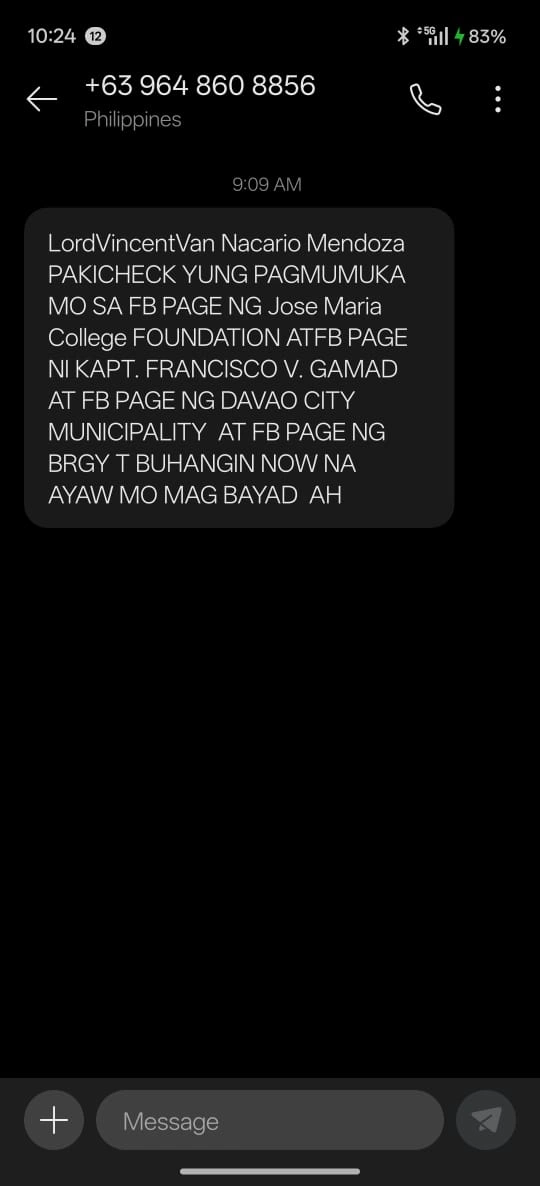
What you can read above is a text message sent to me by my brother. This is a fine example of an unfair debt collection practice among Online Lending Platforms in the Philippines.
- Regulators require transparent disclosures, licensing, and lawful collection methods; key agencies include SEC, BSP, NPC, DOJ Office of Cybercrime.
- Identify unfair practices: threats, shaming, undisclosed fees, term changes, communications outside allowed hours, and persistent multi channel harassment.
- Document evidence and verify licensing before filing complaints; save loan agreements, messages, screenshots, call logs, and consent records.
- Report to SEC for collection abuses, NPC for data privacy violations, and law enforcement or DOJ cybercrime for threats or criminal conduct.
Purpose and scope of the article
This piece analyzes online lending apps and sites in the Philippines where debt collection practices have raised concerns. It focuses on regulatory boundaries, identifying unfair tactics, and outlining practical steps for borrowers and lenders. The guidance is grounded in current law and agency advisories.
Readers will find indicators of abusive practices, along with consumer rights and remedies under existing regulations. Credible reporting channels for protective action or remediation are highlighted.
Online lending in the Philippines and regulatory stance
Digital lending has grown rapidly in the Philippines, with short term loans offered by various platforms. Regulators emphasize responsible lending, data privacy, and compliant collection practices. Key authorities include the Bangko Sentral ng Pilipinas, the SEC, and the National Privacy Commission.
Regulatory guidance covers licensing, fair collection methods, and penalties for harassment or illegal tactics. Aligning with these standards supports consumer protection and the sustainable development of fintech in the sector.
Regulatory Framework Governing Debt Collection
SEC Memorandum Circular No. 18, series 2019 overview
The SEC circular sets standards for lending practices and debt collection in consumer credit facilities. It requires transparent disclosure of fees, interest, and terms at loan origination and outlines compliant approaches to demand letters and permitted communication hours. Lenders should avoid coercive tactics and misrepresentation when pursuing settlements.
Data privacy protections and NPC roles
Data privacy safeguards govern how borrower information is collected, stored, and used by lending platforms. The National Privacy Commission oversees privacy rights and enforces compliance for data handling and consent. Lenders must limit data access, secure personal information, and respect borrower privacy during collection activities.
DOJ Office of Cybercrime advisories and warnings
Advisories highlight the risks of online lending schemes and aggressive collection strategies. The Office of Cybercrime provides guidance on reporting, investigation pathways, and potential criminal implications for abusive practices. Borrowers are encouraged to seek formal channels when harassment or illegal tactics occur.
Legal recourse for victims
- File complaints with SEC for unfair collection practices.
- Approach the NPC for data privacy violations related to personal information handling.
- Engage law enforcement or DOJ cybercrime units if threats or harassment occur.
3. How to Identify Unfair Debt Collection Practices
Red flags in communication and terms
Look for pressure tactics, threats, or shaming intended to compel payment. Unclear or inflated fees and undisclosed interest raise red flags, as do terms that shift after approval. Communications outside allowed hours or through multiple channels can signal aggressive collection.
Verification of licensing and authority
Verify the lending platform is properly licensed with the relevant regulator. Check registration status with the SEC or BSP as applicable, and confirm whether the company operates under the Lending Company Regulation Act or the Financing Company Act. Treat unlicensed actors with caution.
Documentation and evidence collection
Maintain copies of loan agreements, demand letters, and notices. Preserve all messages, call logs, and email threads related to the debt. Accurate records help determine whether terms were disclosed and whether collection efforts complied with policy.
Reporting channels and escalation steps
- File a formal complaint with the SEC for improper collection practices.
- Report data privacy concerns to the National Privacy Commission.
- Contact law enforcement or the DOJ Office of Cybercrime if threats occur.
- Consult consumer protection resources for guidance on next steps.
4. Steps to Take If You Experience Harassment
Immediate actions to protect yourself
Document every interaction and preserve all evidence. Save screenshots, call logs, messages, and any letters. Limit sharing sensitive data publicly and block persistently harassing numbers where appropriate. If you feel unsafe, remove the lender’s access from your devices and secure personal accounts.
Reporting to SEC, NPC, and law enforcement
- File a formal complaint with the Securities and Exchange Commission for unfair collection practices.
- Report data privacy concerns to the National Privacy Commission when personal information is mishandled.
- Alert law enforcement or the DOJ Office of Cybercrime if threats or criminal behavior occur.
Media and consumer protection resources
- Consult consumer rights groups for guidance on documenting harassment and pursuing remedies.
- Use official agency advisories to understand permissible collection windows and channels.
- Escalate through formal channels before seeking public exposure to avoid complicating investigations.
How to respond to debt collectors in writing
Keep responses concise and factual. State your stance clearly, request licensing and authority verification, and demand compliance with regulations. Archive every written exchange and reference the relevant acts when necessary. Avoid revealing additional personal data in reply messages.
5. Case Studies: Notable Incidents and Outcomes
Public advisories and hearings in the Philippines
Regulators have used hearings and advisories to spotlight abusive or unlawful collection practices. These discussions aim to clarify lawful debt recovery methods and highlight gaps in licensing and data handling. Official statements underscore consumer protection and the need for transparent terms.
Apps and sites named in borrower complaints
Borrowers report persistent collection efforts and social pressure from some platforms. Instances of term changes after approval have been noted, reinforcing the need to verify licensing and protect personal data. These cases illustrate how gaps in licensing and data handling can affect borrowers.
Among the online lending apps and sites named in borrower complaints and reports of unfair debt collection practices in the Philippines are:
Before engaging with any of these or similar platforms, verify current licensing status directly with the SEC list of lending and financing companies, since compliance status and complaint records can change over time.
Resolution paths and lessons learned
- Escalation through SEC, NPC, and law enforcement can lead to enforcement actions or settlements.
- Documented evidence strengthens complaints and supports regulatory review.
- Clear disclosures and consent help prevent disputes and protect privacy rights.
6. Best Practices for Lenders and Platforms to Ensure Compliance
Transparent terms and consent
Provide clear, plain language loan terms before approval. Ensure borrowers understand fees, interest, repayment schedules, and any penalties. Obtain explicit consent for data collection and use, and document the approval trail.
- Publish standardized disclosures for all products.
- Allow borrowers to review terms in their preferred language.
- Log consent timestamps and versioning of terms.
Respecting privacy and data handling
Limit data collection to what is necessary and secure sensitive information. Implement access controls and regular audits to prevent unauthorized use. Comply with NPC guidance on data privacy and reporting breaches promptly.
- Minimize data harvesting from devices or contacts.
- Use encryption for storage and transmission of personal data.
- Provide a clear data retention policy and an easy opt-out where appropriate.
Fair, lawful debt collection processes
Adopt a methodical, non coercive approach to recovery. Adhere to permitted hours, channels, and respectful language. Avoid threats, shaming, or misinformation. Maintain a record of all collection communications.
- Verify licensing and authority before contacting borrowers.
- Offer clear dispute mechanisms and response timelines.
- Provide accurate information about outstanding amounts and installment details.
Auditing and incident response plans
Implement regular internal audits of collection practices and data handling. Establish an incident response plan for privacy breaches or abusive behavior reports. Train staff to recognize and escalate irregular activities.
| Area | Best Practice | Compliance Reference |
|---|---|---|
| Terms and consent | Transparent disclosures with recorded consents | SEC Memorandum Circular No. 18, series 2019 |
| Data handling | Minimized data collection, strong security controls | National Privacy Commission guidance |
| Collection practices | Non coercive, lawful methods with documentation | DOJ Office of Cybercrime advisories |
| Audits and response | Regular audits, formal incident response plan | Regulatory and NPC expectations |
FAQ
What counts as unfair debt collection in online lending?
Which agencies handle complaints in the Philippines?
What documents should I collect when filing a complaint?
- Dates and times of communications
- Names of the collectors or platforms
- Exact amounts claimed and any charges or fees
How can I protect my data privacy rights?
What should I do if I face ongoing harassment?
Are there steps for borrowers to verify a lender's licensing?
Conclusion
Recap of key takeaways
Online lending in the Philippines offers convenient access to credit, but it must operate within clear regulatory boundaries. You should expect data handling to be secure, disclosures to be transparent, and collections to follow lawful processes. Remember your rights to challenge harassment and abusive tactics.
Documenting interactions remains crucial. Verify that a lender is properly licensed and keep a complete record of all communications and disclosures. When something feels off, escalate through the formal channels to trigger reviews and protections.
Call to responsible lending and informed consumer action
- Provide clear disclosures and obtain explicit consent for data use.
- Ensure collection efforts are respectful, non coercive, and well documented.
- Escalate concerns to SEC, NPC, or law enforcement if abusive behavior occurs.
References
- Consumer concerns - Credit Information Corporation (CIC)
- Senate Grills Lending Firms Over Abusive Collection, Hefty Charges
- Online Lending Harassment and Excessive Debt Collection Practices
- Feeling overwhelmed by high bills from online apps in the Philippines ...
- Probe 'abusive, illegal' collection practices of online lending firms

Vince is a digital marketing specialist, event host, and content creator based in Davao City, Philippines. Known for blending creativity, communication, and strategy, he helps brands and organizations strengthen their digital presence through compelling content and smart marketing practices. He specializes in SEO, content creation, social media management, pay-per-click advertising, and email marketing—turning ideas into content that builds visibility and helps businesses grow online. Outside of work, he loves to watch Netflix on weekends.