On-Page SEO: The Complete Guide to Optimizing Your Website for Higher Search Rankings in 2026
Last Updated on July 22, 2026 by Lord Vincent Van Mendoza
- Create high-quality comprehensive content demonstrating E-E-A-T that answers user questions and solves problems.
- Optimize keywords naturally in title, meta description, URL, H1, subheadings, opening paragraph, and image alt text.
- Craft SEO-friendly title tags, compelling meta descriptions, logical heading structure, and clean descriptive URLs to improve relevance and CTR.
- Prioritize page speed and mobile friendliness: compress images, enable caching, minify code, use CDN, and responsive design.
- Implement internal linking and image optimization with descriptive alt text to boost crawlability, navigation, and user engagement.
On-page SEO is one of the most important aspects of search engine optimization. It involves optimizing individual web pages to improve their visibility in search engines and provide a better experience for users. Whether you’re a business owner, blogger, or digital marketer, mastering on-page SEO can help increase organic traffic, generate leads, and improve search engine rankings.
In this comprehensive guide, we’ll explore what on-page SEO is, why it matters, key ranking factors, best practices, and frequently asked questions.
What Is On-Page SEO?
On-page SEO refers to all optimization efforts made directly on a website’s pages to help search engines understand content and rank it appropriately.
Unlike off-page SEO, which focuses on external factors such as backlinks and brand mentions, on-page SEO focuses on elements you can control within your website.
These elements include:
- Content quality
- Title tags
- Meta descriptions
- Header tags
- URL structure
- Internal linking
- Image optimization
- User experience
- Page speed
- Mobile responsiveness
When properly optimized, on-page SEO helps search engines determine the relevance and quality of your content.
Why Is On-Page SEO Important?
Search engines aim to provide users with the most relevant and useful results.
Strong on-page SEO helps by:
Improving Search Visibility
Optimized pages are easier for search engines to crawl, understand, and index.
Enhancing User Experience
A well-structured page improves readability, navigation, and engagement.
Increasing Organic Traffic
Higher rankings typically lead to more clicks and website visitors.
Supporting Conversion Goals
Clear content and strategic page optimization can encourage users to take action.
Strengthening Overall SEO Performance
On-page SEO works together with technical SEO and off-page SEO to create a complete optimization strategy.
Essential On-Page SEO Ranking Factors
1. High-Quality Content
Content remains the foundation of effective SEO.
Google prioritizes content that demonstrates:
- Expertise
- Experience
- Authority
- Trustworthiness (E-E-A-T)
Your content should:
- Answer user questions
- Solve problems
- Provide unique insights
- Be comprehensive and accurate
Example
Instead of writing a short 300-word article about SEO, create a detailed guide covering all relevant aspects of the topic.
2. Keyword Optimization
Keywords help search engines understand the topic of a page.
Include your target keyword naturally in:
- Page title
- Meta description
- URL
- H1 heading
- Subheadings
- Opening paragraph
- Image alt text
- Throughout the content
Avoid keyword stuffing, which can negatively impact rankings.
Example
Target Keyword:
On-page SEO
Natural Usage:
“On-page SEO helps improve website visibility by optimizing content, structure, and user experience.”
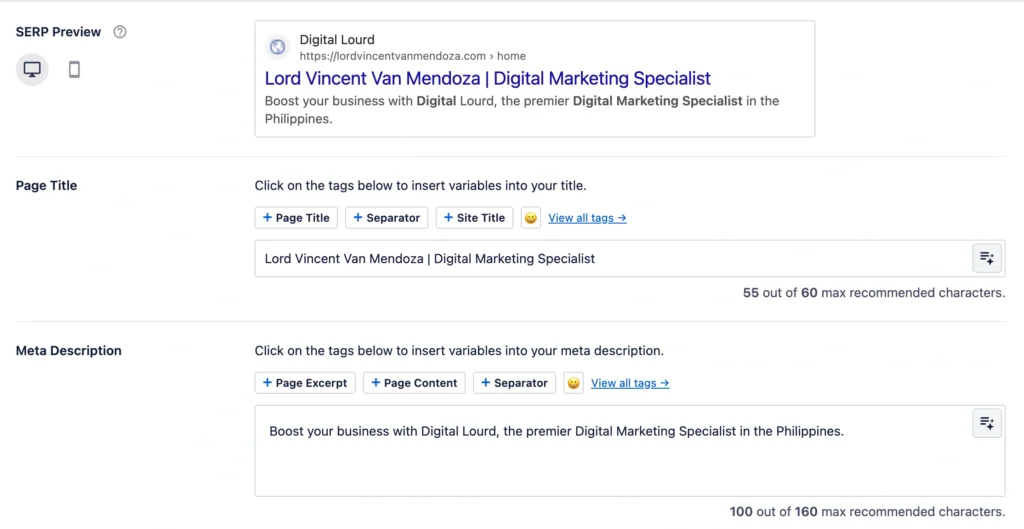
3. SEO-Friendly Title Tags
The title tag is one of the strongest on-page ranking signals.
Best practices:
- Keep between 50–60 characters
- Include the primary keyword
- Make it compelling for users
- Place important keywords near the beginning
Example
On-Page SEO Guide: Improve Rankings and Traffic
4. Optimized Meta Descriptions
While meta descriptions are not direct ranking factors, they influence click-through rates.
Best practices:
- Keep under 160 characters
- Include target keywords
- Encourage users to click
Example
“Learn the best on-page SEO strategies to improve rankings, increase traffic, and optimize your website for search engines.”
5. Proper Heading Structure
Use heading tags logically:
- H1 for the page title
- H2 for major sections
- H3 for subsections
Benefits include:
- Improved readability
- Better content organization
- Enhanced keyword relevance
6. SEO-Friendly URLs
Clean URLs help both users and search engines understand page content.
Good URL
yourwebsite.com/on-page-seo-guide
Poor URL
yourwebsite.com/page?id=12345
Best practices:
- Keep URLs short
- Use descriptive keywords
- Avoid unnecessary parameters
7. Internal Linking
Internal links connect related pages within your website.
Benefits include:
- Improved crawlability
- Better user navigation
- Increased page authority distribution
Example:
A page about SEO services can link to related articles on technical SEO, local SEO, and content marketing.
8. Image Optimization
Images improve engagement but should be optimized properly.
Best practices:
- Compress image sizes
- Use descriptive filenames
- Add alt text
- Choose modern formats such as WebP
Example Alt Text
“On-page SEO optimization checklist for websites”
9. Mobile Friendliness
Google primarily uses mobile-first indexing.
Your website should:
- Display properly on smartphones
- Have readable text
- Feature responsive design
- Load quickly on mobile devices
A poor mobile experience can hurt rankings and conversions.
10. Page Speed Optimization
Fast-loading websites create better user experiences.
Strategies include:
- Compress images
- Enable browser caching
- Minify CSS and JavaScript
- Use a content delivery network (CDN)
- Upgrade hosting if necessary
Page speed impacts:
- User engagement
- Bounce rate
- Search rankings
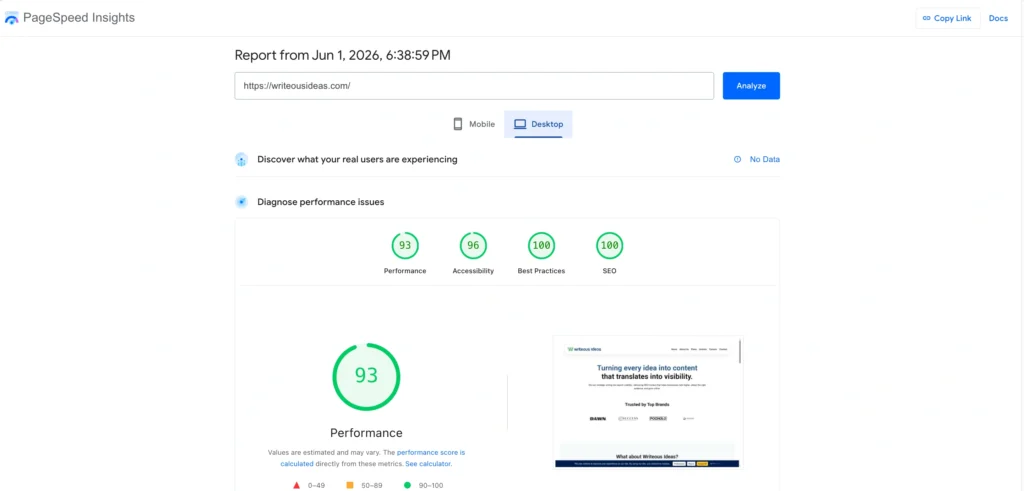
You can check your site’s speed performance using PageSpeed Insights by Google.
Here’s an example from Writeous Ideas’ Page Speed test:
11. User Experience (UX)
Search engines increasingly evaluate user satisfaction.
Focus on:
- Easy navigation
- Clear layouts
- Readable typography
- Minimal intrusive popups
- Accessible design
Good UX often leads to longer session durations and improved rankings.
On-Page SEO Checklist
Use this checklist before publishing any page:
✔ Target keyword identified
✔ Keyword included in title tag
✔ Keyword included in meta description
✔ SEO-friendly URL
✔ One H1 heading
✔ Proper H2 and H3 structure
✔ High-quality content
✔ Internal links added
✔ Images optimized
✔ Alt text included
✔ Mobile-friendly design
✔ Fast loading speed
✔ Clear call-to-action
✔ Grammar and spelling checked
Common On-Page SEO Mistakes
Keyword Stuffing
Overusing keywords makes content appear unnatural.
Duplicate Content
Publishing identical content across multiple pages can confuse search engines.
Missing Title Tags
Every page should have a unique and optimized title.
Poor Internal Linking
Pages without internal links may struggle to gain visibility.
Slow Page Speed
Large images and excessive scripts can negatively impact performance.
Ignoring Search Intent
Content should match what users are actually looking for.
On-Page SEO vs. Off-Page SEO
| On-Page SEO | Off-Page SEO |
|---|---|
| Optimizes website content | Builds authority externally |
| Controlled by website owner | Influenced by third parties |
| Focuses on content and structure | Focuses on backlinks and mentions |
| Improves user experience | Improves domain authority |
Both strategies are essential for long-term SEO success.
Future Trends in On-Page SEO
Search engine algorithms continue to evolve.
Important trends include:
- AI-generated search experiences
- User intent optimization
- E-E-A-T signals
- Core Web Vitals
- Semantic search
- Voice search optimization
- Helpful content updates
Websites that prioritize user value and content quality are more likely to achieve sustainable rankings.
On-page SEO is the foundation of every successful search engine optimization strategy. By optimizing content, titles, URLs, internal links, images, and user experience, you can improve search visibility, attract qualified traffic, and achieve long-term growth.
Businesses that consistently invest in high-quality on-page SEO often gain a competitive advantage in search results while providing a better experience for their audience.
Frequently Asked Questions About On-Page SEO

Vince is a digital marketing specialist, event host, and content creator based in Davao City, Philippines. Known for blending creativity, communication, and strategy, he helps brands and organizations strengthen their digital presence through compelling content and smart marketing practices. He specializes in SEO, content creation, social media management, pay-per-click advertising, and email marketing—turning ideas into content that builds visibility and helps businesses grow online. Outside of work, he loves to watch Netflix on weekends.