
Why you should have a website for your business

Introduction
Overview of the digital landscape for Philippine-based businesses
In the Philippines, more customers begin their search online. A strong online presence helps you reach local communities and nearby markets. Your website becomes a reliable address where people can learn, compare, and decide.
- Adds instant credibility and reassures customers that your business is legitimate and professional.
- Attracts more leads by letting prospects find you, learn about offerings, and contact you directly.
- Improves findability with SEO so customers discover your products or services in search results.
- Gives control over your brand message, values, and differentiation, attracting the right customers.
- Introduction
- 1. Establish Credibility and Professionalism with a Website
- 2. Expand Reach Beyond Local Boundaries
- 3. Showcase Your Brand and Services
- 4. Improve Lead Generation and Conversion
- 5. Enhance Search Visibility and Online Discoverability
- 6. Support Customer Education and Trust
- 7. Cost-Effective Marketing Hub and Automation Backbone
- FAQ
- Conclusion
Do you have a website for your business?
— Lord Vincent Van Mendoza (@digitallourd) September 17, 2025
Small businesses face stiff competition from larger brands. A polished website signals professionalism and credibility that social posts alone cannot. It also supports local search efforts, helping people in your geographic area discover you when they search for services you offer.
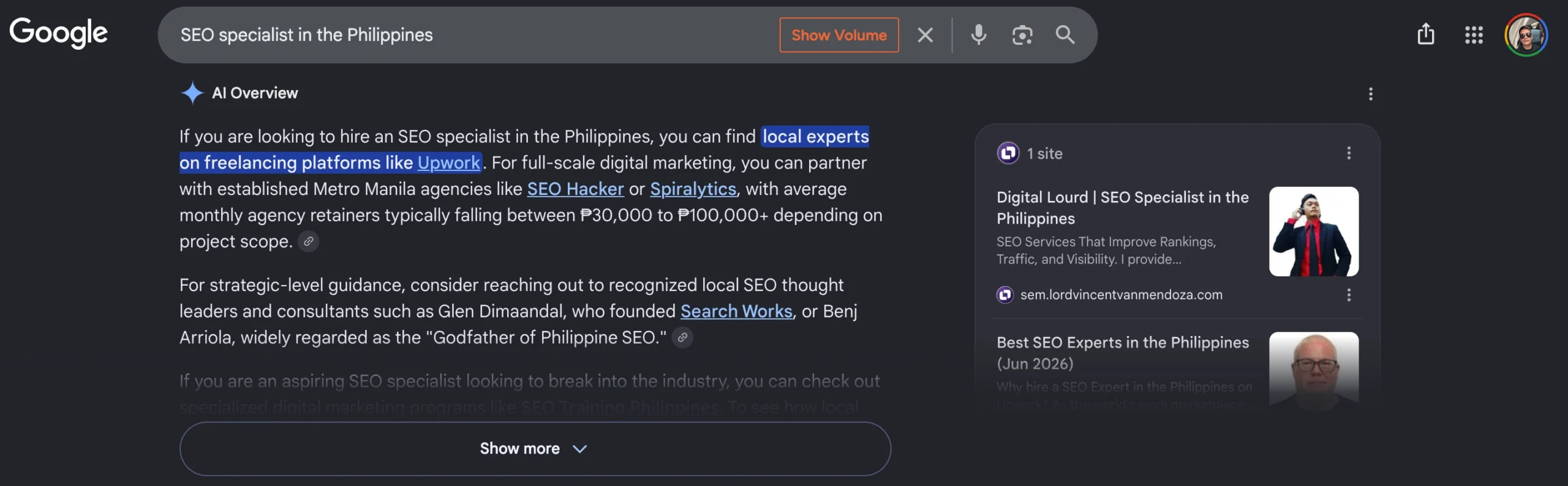
In my case as an SEO specialist in the country, businesses can easily find me. The secret? I have an optimized website for searches.
A neighborhood bakery can feature daily menus, delivery areas, and customer reviews, driving foot traffic and orders from nearby towns. If you run a small clinic, a clear appointment booking tool on the site reduces phone time and improves show rates.
You just need to verify your NAP (name, address, phone) consistency across maps and directories to boost local SEO. Track how many people arrive via organic search versus social to allocate budget more effectively.
How a website fits into a modern marketing mix
A website is the central hub for your marketing. It houses your messaging, showcases your services, and hosts your lead capture tools. Think of it as the welcome mat for every channel you use.
Used well, a site integrates with content, SEO, ads, email, and social media. You can educate visitors, demonstrate outcomes, and convert interest into inquiries. This creates a cohesive, measurable path from discovery to action.
Actionable step: implement a simple lead form with a clear value offer, like a free consultation or downloadable checklist, and pair it with a thank-you page that suggests next steps.
Expert insight: Ensure your site loads within two seconds on mobile networks common in provincial areas to avoid drop-offs. Monitor bounce rates by page and iterate on headlines and CTAs accordingly.
1. Establish Credibility and Professionalism with a Website
Building trust through a polished online presence
A well-crafted website signals that you take your business seriously. It reflects your brand’s values, tone, and professionalism, which helps potential customers feel confident in choosing you.
Users judge legitimacy by design quality, accurate information, and easy navigation. A clean layout with clear service descriptions and contact options reduces friction and reassures visitors they are making a smart choice.
Your website as the first impression anchor
For many customers, your site is the first touchpoint. It sets expectations about your reliability, response times, and expertise. Think of it as the anchor that other channels point back to.
Consistent branding across visuals, copy, and testimonials reinforces trust. A focused homepage quickly communicates who you serve, what you offer, and how to get in touch.
- Professional design builds perceived value.
- Accurate, up-to-date information reinforces credibility.
- Accessible contact pathways shorten the path to inquiry.
2. Expand Reach Beyond Local Boundaries
Unlocking global and regional market access
Your website helps you reach customers beyond your immediate area. For example, a B2B printer service can display a regional pricing page and case studies from nearby industries to attract adjacent markets. A well structured site guides visitors to relevant information quickly, no matter their location.
Tailor content to geographic intent by creating pages for nearby markets and languages. If you serve both English and Spanish speakers in Texas and California, include localized pricing, testimonials, and service bundles. This approach expands your potential customer pool without duplicating effort.
Overcoming geographical limits with online discovery
Online discovery reduces the need for brick and mortar presence. If your site ranks for regional queries like “industrial printing Texas,” you gain visibility without opening a new office. Regionally optimized pages can boost regional lead share compared with pages that aren’t tailored to location.
Use structured content and intuitive navigation to move visitors from first impression to inquiry, wherever they come from. Your online storefront serves as a hub for leads across multiple geographies.
- Reach customers beyond your town or city with location pages
- Align content to regional search intent for better visibility
- Use language and currency variations to cater to specific markets while preserving brand cohesion
3. Showcase Your Brand and Services
Clear articulation of services: content marketing, affiliate marketing, inbound/outbound marketing, marketing automation, ads management, social media marketing
Your site should present a concise, organized view of what you offer. Group services into logical categories and use plain language that local customers understand. Use short descriptions that explain outcomes, not just features.
Show how each service fits into a broader strategy. For example, position content marketing as education that attracts and nurtures leads, while marketing automation handles follow ups at scale. Keep service pages scannable with clear headers and bullets.
- Content marketing: educational, engaging materials that establish authority and trust
- Affiliate marketing: strategic partnerships that extend reach and credibility
- Inbound/outbound marketing: attract leads and proactively reach prospects
- Marketing automation: automate workflows, scoring, and follow ups
- Ads management: optimize spend across channels for measurable lift
- Social media marketing: amplify brand voice and drive engagement
Portfolio and case studies: translating value into visuals and narratives
Show concrete results in a well organized portfolio. Include project summaries, challenges, actions, and outcomes. Use before/after metrics, charts, and captions to convey impact quickly.
Testimonials and short client stories add credibility. Pair each case with a concise problem, approach, and measurable result to illustrate value clearly.
4. Improve Lead Generation and Conversion
Optimized landing pages and clear CTAs
A well-structured landing page focuses on a single goal. Clear value propositions and concise copy guide visitors toward a specific action. Visuals should support the message without distracting from the CTA.
Every page should feature a prominent, action-oriented CTA. Use contrasting colors and minimal form fields to reduce friction and increase completion rates.
- Visible value proposition above the fold
- Minimal, relevant form fields
- Consistent messaging across pages
Lead magnets, inquiries, and contact funnels
Offer valuable lead magnets that align with your services. This incentivizes visitors to share contact details and enter your funnel.
Design a clean inquiry path: an accessible contact form, a dedicated support channel, and an automated follow-up sequence. The goal is to capture intent and nurture it efficiently.
- Content upgrades, checklists, or templates as incentives
- Structured inquiry forms with essential fields
- Automated, timely follow-ups to move leads forward
5. Enhance Search Visibility and Online Discoverability
Fundamental SEO for small businesses in the Philippines
SEO helps your site appear when people search for goods or services you offer. Start with keyword research that reflects your local market and geography. Use these terms naturally in page titles, headings, and core copy.
Technical basics matter too. Ensure fast load times, secure connections, and mobile friendly formatting. Clear navigation keeps visitors and search engines on the right paths, boosting indexability.
- Local intent: include geographic modifiers in primary keywords
- Meta elements: descriptive titles and concise descriptions
- Mobile optimization: responsive design for on the go searches
Content strategy and structured data for authority
Publish content that educates your audience and answers common questions. Align topics with buyer needs and geographic relevance to improve topical authority. Regular updates signal freshness to search engines.
Structured data helps search engines understand your content. Implement basics like organization, local business, and service schema where appropriate to support rich results.
6. Support Customer Education and Trust
Resources, FAQs, and educational content
A well organized repository of resources helps visitors learn quickly. Publish practical how to guides, glossary terms, and actionable tips that align with your services. Clear content reduces friction and positions you as a knowledgeable partner.
FAQs should address common concerns with concise answers. Regularly update them as new questions arise to maintain relevance and trust.
- Knowledge bases that address typical customer questions
- Step by step guides aligned to your offerings
- Glossaries that clarify industry terms for newcomers
Showcasing results through case studies and testimonials
Case studies translate your value into real world outcomes. Outline the challenge, approach, and measurable result in a clean narrative. Include visuals like charts or timelines to illustrate impact at a glance.
Testimonials provide social proof from credible sources. Pair each quote with a brief context to demonstrate relevance to potential clients.
- Before and after scenarios with concrete metrics
- Client stories that reflect common buyer journeys
- Quotes that emphasize outcomes, not just services
7. Cost-Effective Marketing Hub and Automation Backbone
Integrating marketing automation with a central platform
A single platform can coordinate your outreach, content, and data. This consolidation reduces duplicate tools and lowers overall costs while improving consistency across channels.
Centralized automation helps you standardize processes, from lead capture to nurturing sequences, so you move faster and with less manual effort.
- Unified contact management for better segmentation
- Consistent messaging across email, social, and site experiences
- Automation workflows that scale with your business growth
Efficiently managing ads, social campaigns, and content from one place
Managing ads, social posts, and content calendars from a single dashboard improves visibility and reduces the risk of misalignment.
This approach streamlines approvals, performance tracking, and budget allocation, helping you maximize impact per dollar spent.
Practical steps to implement:
- Map your current tools to a single platform and identify gaps in data flow
- Set up a universal calendar that ties ad bursts to blog publishes and email drops
- Create a canned approval workflow to cut review times by 40 to 60 percent
| Aspect | Benefits | What to Track |
|---|---|---|
| Automation | Fewer manual tasks, scalable workflows | Open rates, click-throughs, nurture progression |
| Advertising | Coordinated campaigns, consistent attribution | Impressions, conversions, cost per acquisition |
| Social and Content | Aligned messaging, synchronized publishing | Engagement, reach, content velocity |
Tip from industry practice: run a quarterly audit to confirm attribution consistency across platforms and adjust attribution models to reflect recent platform changes.
For reference, firms like lordvincentvanmendoza.com have seen faster go-to-market cycles when workflows are centralized and data is standardized across channels.
FAQ
Is a website worth having for my business?
A website acts as a permanent storefront that is accessible 24/7. It lets you reach customers beyond your immediate area and provides a reliable channel for inquiries and purchases. For example, a local landscaper can showcase service packages, pricing, and a gallery of completed jobs to attract clients who search online after work hours.
Even if you rely on referrals or local word of mouth, a website legitimizes your operation and supports trust with potential clients. Include an about page with team bios and a simple process diagram to set clear expectations.
What are the core benefits a website delivers for small businesses?
- Credibility and professionalism that reassure visitors
- Expanded reach through online discovery and search visibility
- Clear articulation of services and value propositions
- Lead generation through optimized landing pages and contact funnels
- Educational content to inform customers and reduce support needs
- Centralized marketing hub for automation and campaign coordination
How do I measure the impact of a business website?
Track metrics that reflect engagement and outcomes. Start with a core set and expand over time. For instance, monitor monthly visitors from organic search and compare against paid campaigns to balance spend.
- Traffic and source breakdown to understand where visitors come from
- Conversion rate on key pages such as service detail and contact forms
- Lead volume and lead quality from inquiries and downloads
- Engagement signals like time on site and page depth
- SEO performance including keyword rankings and organic clicks
| Measurement Area | What It Indicates | Suggested Target |
|---|---|---|
| Traffic by source | Effectiveness of marketing channels | Top three sources stable month over month |
| Conversion rate | Page effectiveness and user intent | >2% on primary service page |
| Lead volume | Interest and demand in offerings | Steady increase quarter over quarter |
Conclusion
Recap of why a website matters for your Philippines-based business
A website anchors your online presence and signals professionalism to local and regional audiences. It serves as a welcoming hub that educates visitors, builds trust, and reinforces credibility beyond word of mouth. In today’s market, a site supports discovery, showcases services, and helps you compete with nearby firms.
Practically, a website centralizes your marketing. It brings together your content, testimonials, and case studies in one place, making it easier for potential clients to understand what you offer and how you can help them grow. It also serves as a reliable reference point after people engage with ads or social posts.
Next steps to start building or upgrading your site
- Audit your current online presence to uncover gaps in messaging, credibility, and lead capture. Correct inconsistent contact details across directories.
- Clarify core services and outcomes to feature on the homepage and service pages. Highlight concrete results you’ve achieved.
- Plan essential pages: About, Services, Case Studies, FAQs, and a straightforward contact path. Include local identifiers to boost relevance.
- Set up solid SEO foundations and a structured content plan to attract local and regional searchers. Target phrases that reflect your geography and service.
- Choose a scalable platform that supports automation and future campaigns from a single dashboard. Favor integrations with email, chat, and CRM tools to streamline follow up.
References

Vince is a digital marketing specialist, event host, and content creator based in Davao City, Philippines. Known for blending creativity, communication, and strategy, he helps brands and organizations strengthen their digital presence through compelling content and smart marketing practices. He specializes in SEO, content creation, social media management, pay-per-click advertising, and email marketing—turning ideas into content that builds visibility and helps businesses grow online. Outside of work, he loves to watch Netflix on weekends.